NASDAQ: NVDA
NASDAQ: NVDA — The Simple Guide to Nvidia, the Nasdaq, and What Moves Prices
When people type nasdaq: nvda, they usually want one thing. They want clarity. They want to understand what is happening with Nvidia and how it connects to the wider tech market. That wider market often means the nasdaq and the nasdaq composite. The Nasdaq is best known for technology companies. The Nasdaq Composite includes thousands of Nasdaq-listed stocks and is weighted by company size. That means larger companies can influence the index more strongly. Nvidia is one of those companies. Because of that, nasdaq: nvda has become more than just a stock ticker. It has become a symbol of innovation, growth, and market emotion. In this guide, everything is explained in simple language, with real-world context and easy examples.
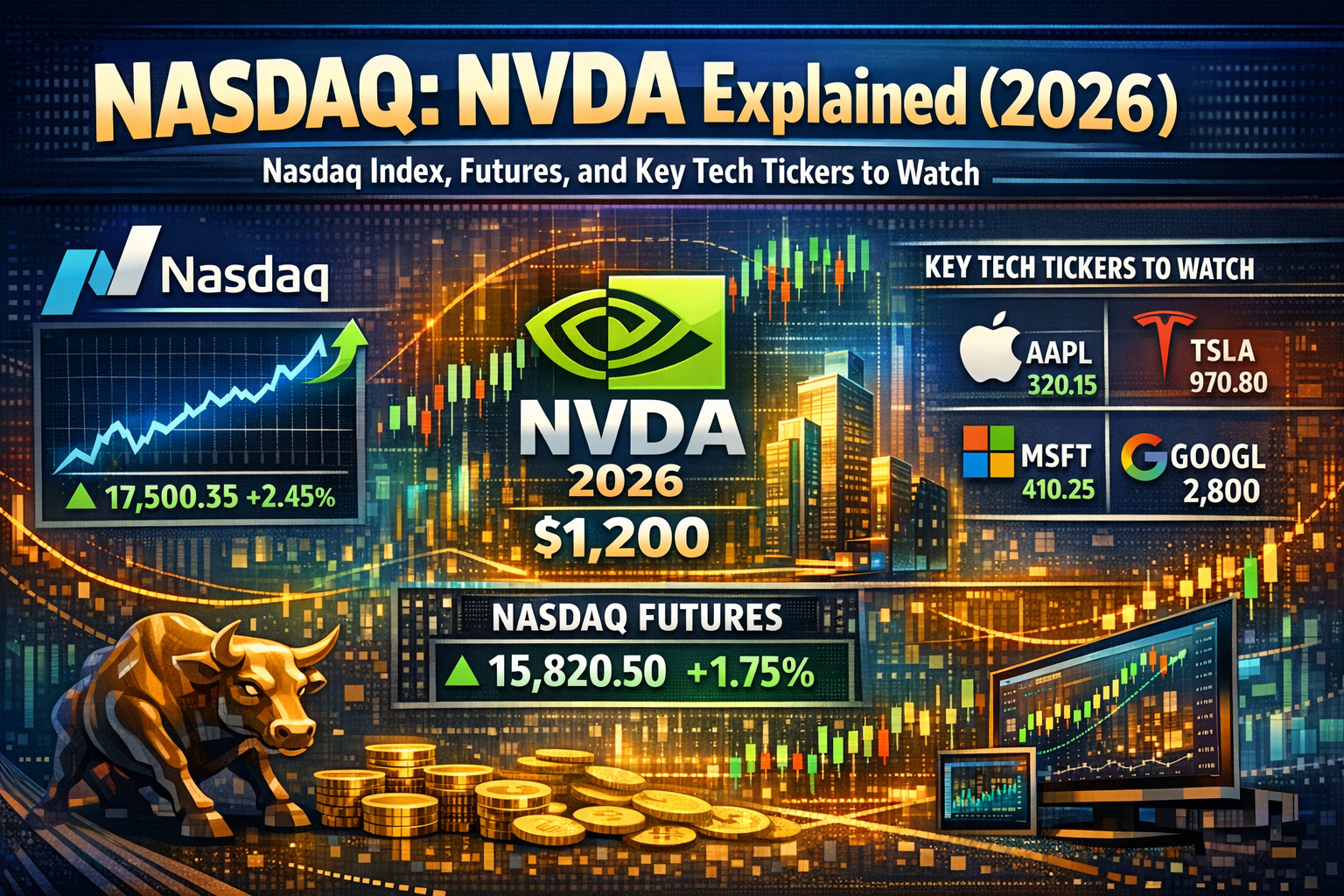
Visual Overview
This image slot is here to keep the page balanced and premium. Add a chart-style graphic, a market-themed banner, or a clean finance illustration. The layout stays centered and professional without leaving empty space.
What “nasdaq: nvda” Really Means (In Plain Words)
At its core, nasdaq: nvda simply means Nvidia shares trading on the Nasdaq exchange. The format helps people quickly identify where the stock is listed. You will see the same style used for other major companies, such as nasdaq: tsla, nasdaq: amzn, nasdaq: msft, and nasdaq: aapl. This matters because the Nasdaq is not just a place to trade stocks. It also represents a group of market indexes that track performance. The most talked-about one is the nasdaq composite, which leans heavily toward technology companies. When Nvidia moves sharply, it can affect how investors feel about the entire tech sector. That is why this single ticker attracts so much attention.
Nasdaq vs. Nasdaq Index: Two Words, Different Meanings
Many people use the word “Nasdaq” without realizing it has two meanings. One meaning refers to the exchange itself, where stocks are bought and sold. The second meaning refers to indexes that measure performance. The nasdaq composite is the most widely referenced index and includes most companies listed on the exchange. Some people also say nasdaq index as a general phrase. They may be referring to the Composite or another benchmark. The difference matters because not all indexes move the same way. Nvidia has a stronger effect on broader tech-heavy indexes. Understanding this difference helps make sense of daily market headlines and price moves.
Why NASDAQ: NVDA Can Shift Market Sentiment
Nasdaq: nvda often acts like a mood indicator for the tech market. When Nvidia rises quickly, confidence spreads. When it drops sharply, fear can follow. This happens because Nvidia sits at the center of several powerful trends, including advanced computing and data processing. The Nasdaq Composite is heavily weighted toward large technology companies. When Nvidia moves, it can pull the index with it. This is why many investors watch Nvidia even if they do not own the stock. It helps them understand whether the market feels optimistic or cautious. In many ways, Nvidia has become a temperature gauge for modern technology investing.
Nasdaq Futures and Early Market Signals
Nasdaq futures are often checked before the market opens. These contracts trade outside normal market hours and reflect expectations for the upcoming session. If futures are rising, traders expect a stronger opening. If they are falling, traders prepare for pressure. Futures do not predict the future with certainty, but they offer early clues. Nvidia can react strongly to overnight news, which sometimes shows up in futures first. When people search nasdaq today, futures are often mentioned because they help frame expectations before trading begins.
How Major Nasdaq Stocks Move Together
Investors rarely watch just one stock in isolation. They often track a group of major names together. This group commonly includes nasdaq: nvda, nasdaq: aapl, nasdaq: msft, nasdaq: amzn, and nasdaq: tsla. These companies are large, widely held, and influential. When several of them rise together, the Nasdaq Composite often looks strong. When they fall together, the entire market can feel heavy. This group behavior explains why headlines sometimes focus on a handful of stocks instead of thousands. These leaders shape perception and momentum.
AMD, INTC, AVGO, and SMCI: The Hardware Connection
The story of nasdaq: nvda is closely linked to other hardware-focused companies. Nasdaq: amd and nasdaq: intc compete in different parts of the chip industry. Nasdaq: avgo connects through networking and infrastructure technology. Nasdaq: smci plays a role in server systems and data center equipment. These companies often move together because they serve similar customers and respond to the same demand trends. When data center spending rises, many of these stocks benefit. When demand slows, pressure can spread across the group. Watching this cluster gives deeper insight into Nvidia’s environment.
TSLA, META, and PLTR: Sentiment Beyond Chips
Not all stocks tied to nasdaq: nvda are chip makers. Nasdaq: tsla, nasdaq: meta, and nasdaq: pltr influence market psychology in different ways. Tesla often reflects growth appetite. Meta reflects advertising and digital engagement. Palantir reflects enterprise and government technology spending. When investors feel positive about growth, these stocks often perform well. That positive mood can lift Nvidia too. When risk appetite fades, even strong companies can struggle. These connections are emotional as much as financial, but emotions matter in markets.
RGTI and the Role of Future Tech Hype
Smaller companies like nasdaq: rgti can create outsized noise. These stocks often move sharply on headlines, speculation, or excitement around future technology. While they do not directly compete with Nvidia, they influence overall sentiment. When future-focused technology is popular, enthusiasm can spill over into larger, established names. When excitement fades, risk appetite drops. Nvidia sometimes benefits from these waves of optimism, even though its fundamentals are very different. Understanding this dynamic helps separate hype from lasting value.
What NDAQ Represents in the Nasdaq Ecosystem
Nasdaq: ndaq is not an index. It is the company that operates the Nasdaq exchange and related services. This distinction is important. The Nasdaq company provides trading systems, market data, and technology infrastructure. While it does not move like tech stocks such as Nvidia, it represents the business side of global markets. Knowing the difference between the exchange operator and the index helps reduce confusion and improves financial literacy.
A Simple “Nasdaq Today” Reading Habit
If market news feels overwhelming, a simple routine helps. First, glance at nasdaq futures to understand early sentiment. Second, check whether moves are broad or limited to a few stocks. Third, look at leaders like nasdaq: nvda, nasdaq: aapl, nasdaq: msft, nasdaq: amzn, and nasdaq: tsla. Fourth, scan hardware names such as nasdaq: amd, nasdaq: intc, nasdaq: avgo, and nasdaq: smci. Finally, read one clear headline and stop. Too much information leads to emotional decisions. Clarity comes from simplicity.
Detailed Nasdaq Reference Table
| Keyword / Ticker | What it represents | Why it matters |
|---|---|---|
| nasdaq | Stock exchange and market ecosystem | Home to major tech companies and growth leaders |
| nasdaq composite | Broad tech-heavy index | Shows overall market mood and tech direction |
| nasdaq index | General term for Nasdaq benchmarks | Used in daily summaries and quick market talk |
| nasdaq futures | Pre-market trading contracts | Signals early sentiment before the open |
| nasdaq today | Daily market snapshot phrase | Quick view of direction and momentum |
| nasdaq: nvda | Nvidia on Nasdaq | Major tech momentum indicator many traders track |
| nasdaq: tsla / nasdaq:tsla | Tesla on Nasdaq | Growth and risk sentiment signal |
| nasdaq: amzn | Amazon on Nasdaq | Tracks consumer and cloud trends |
| nasdaq: msft | Microsoft on Nasdaq | Shows enterprise tech strength and stability |
| nasdaq: aapl | Apple on Nasdaq | Reflects consumer device cycles and demand |
| nasdaq: amd | AMD on Nasdaq | Chip competition and compute demand |
| nasdaq: intc | Intel on Nasdaq | Manufacturing and PC demand signals |
| nasdaq: meta | Meta on Nasdaq | Advertising and attention economy trends |
| nasdaq: pltr | Palantir on Nasdaq | Enterprise and government tech themes |
| nasdaq: avgo | Broadcom on Nasdaq | Infrastructure demand and networking exposure |
| nasdaq: smci | Super Micro on Nasdaq | Server and data center builds |
| nasdaq: rgti | Rigetti on Nasdaq | Future-tech sentiment and speculation waves |
| nasdaq: ndaq | Nasdaq company | Market operations, systems, and infrastructure |
How to Think Clearly About NASDAQ: NVDA
The biggest mistake people make is reacting emotionally. Nasdaq: nvda moves fast, but speed does not equal meaning. Focus on demand trends, competition, and overall market mood. Watch how Nvidia behaves relative to the nasdaq composite. Notice whether moves are isolated or broad. Markets are forward-looking and imperfect. Prices often move before answers are clear. Patience and perspective matter more than prediction. Treat price action as information, not instruction.
FAQs
What does “nasdaq: nvda” mean?
Is nasdaq: nvda the same as NVDA?
Why does Nvidia affect the Nasdaq so much?
What are Nasdaq futures used for?
Is nasdaq: ndaq the Nasdaq index?
Why are so many tech stocks discussed together?
About the Author